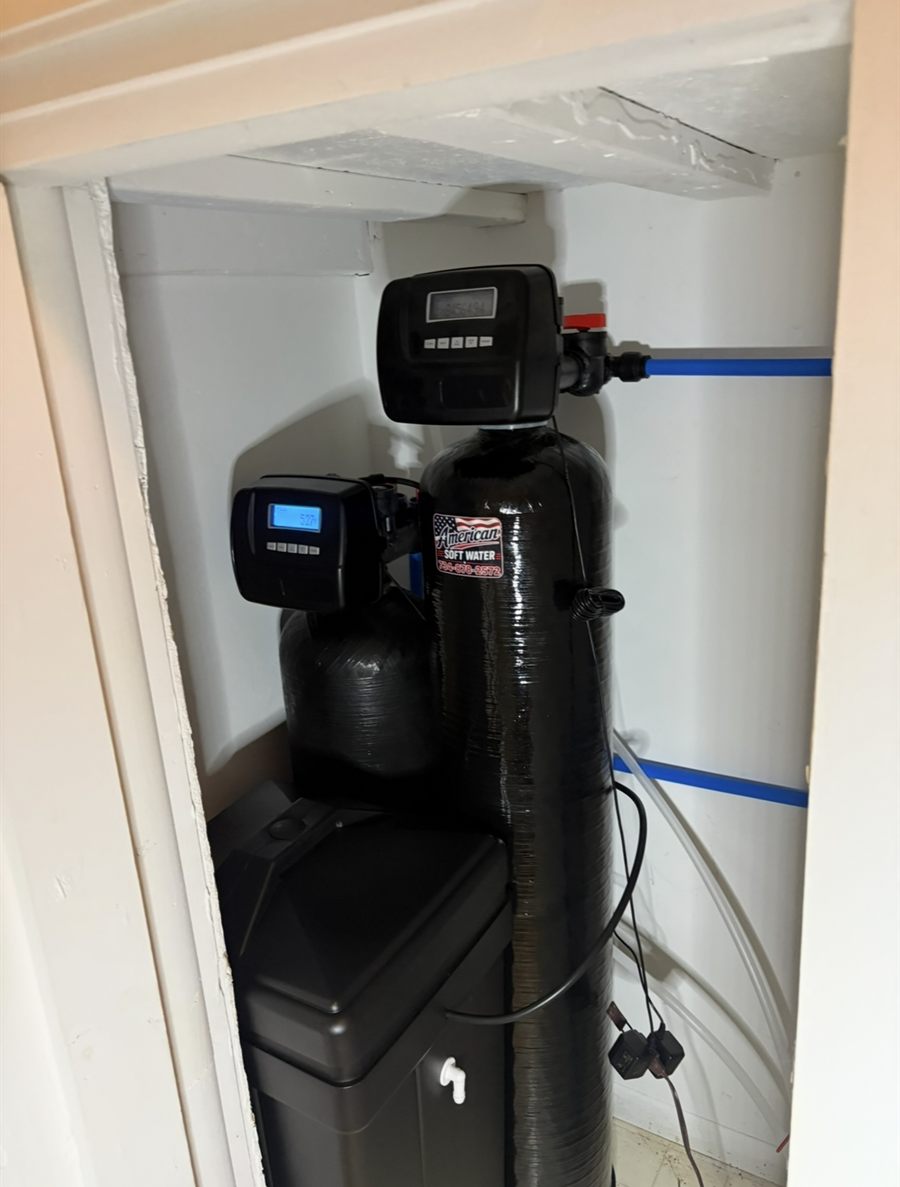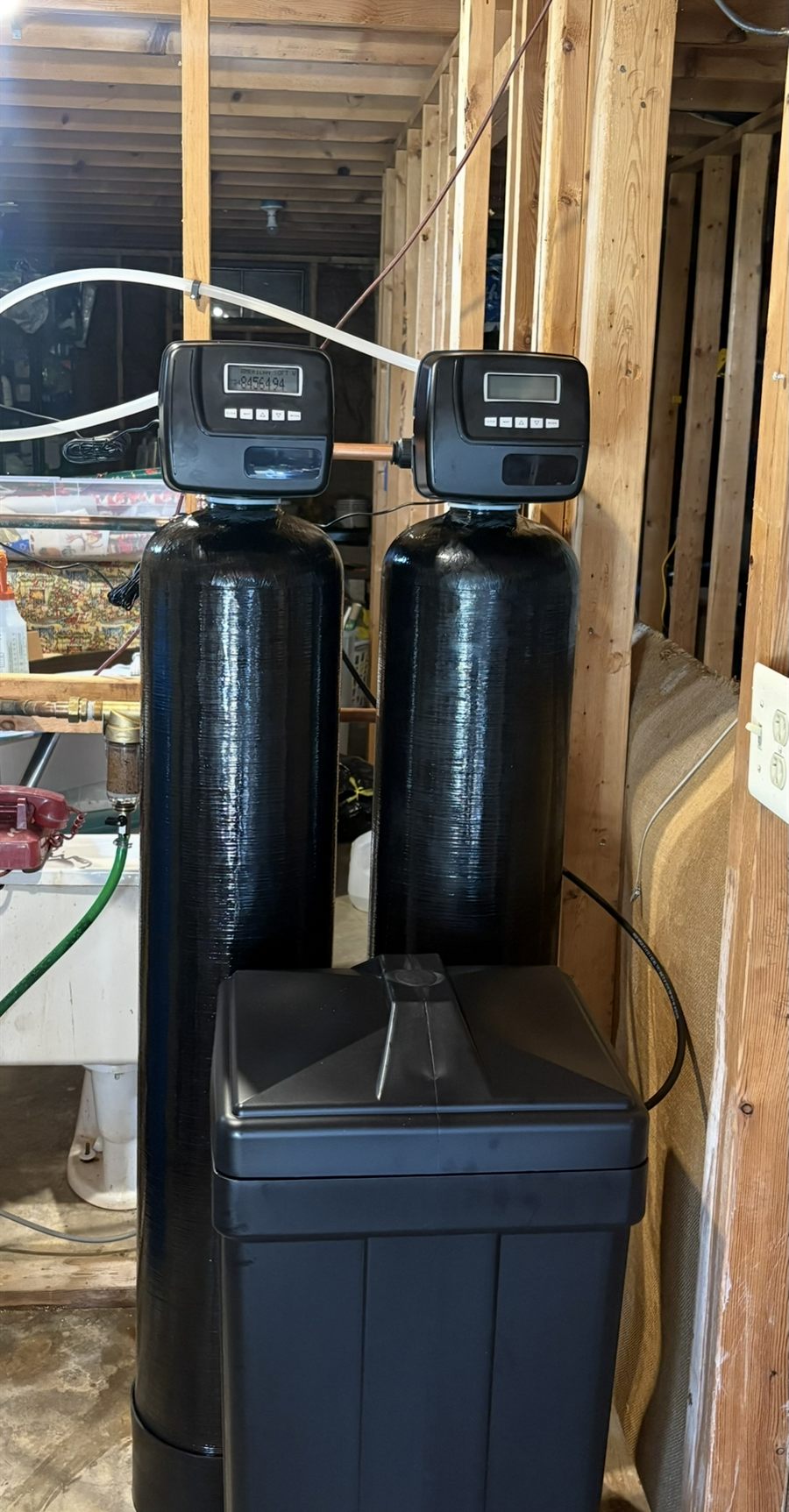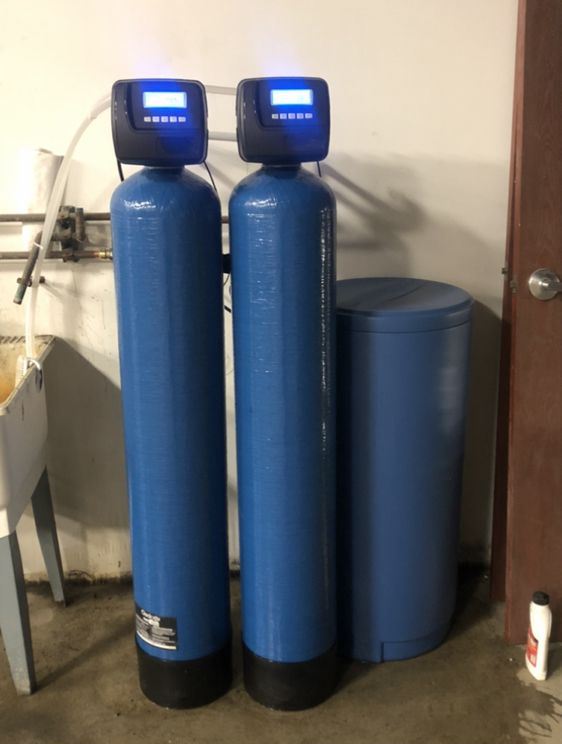
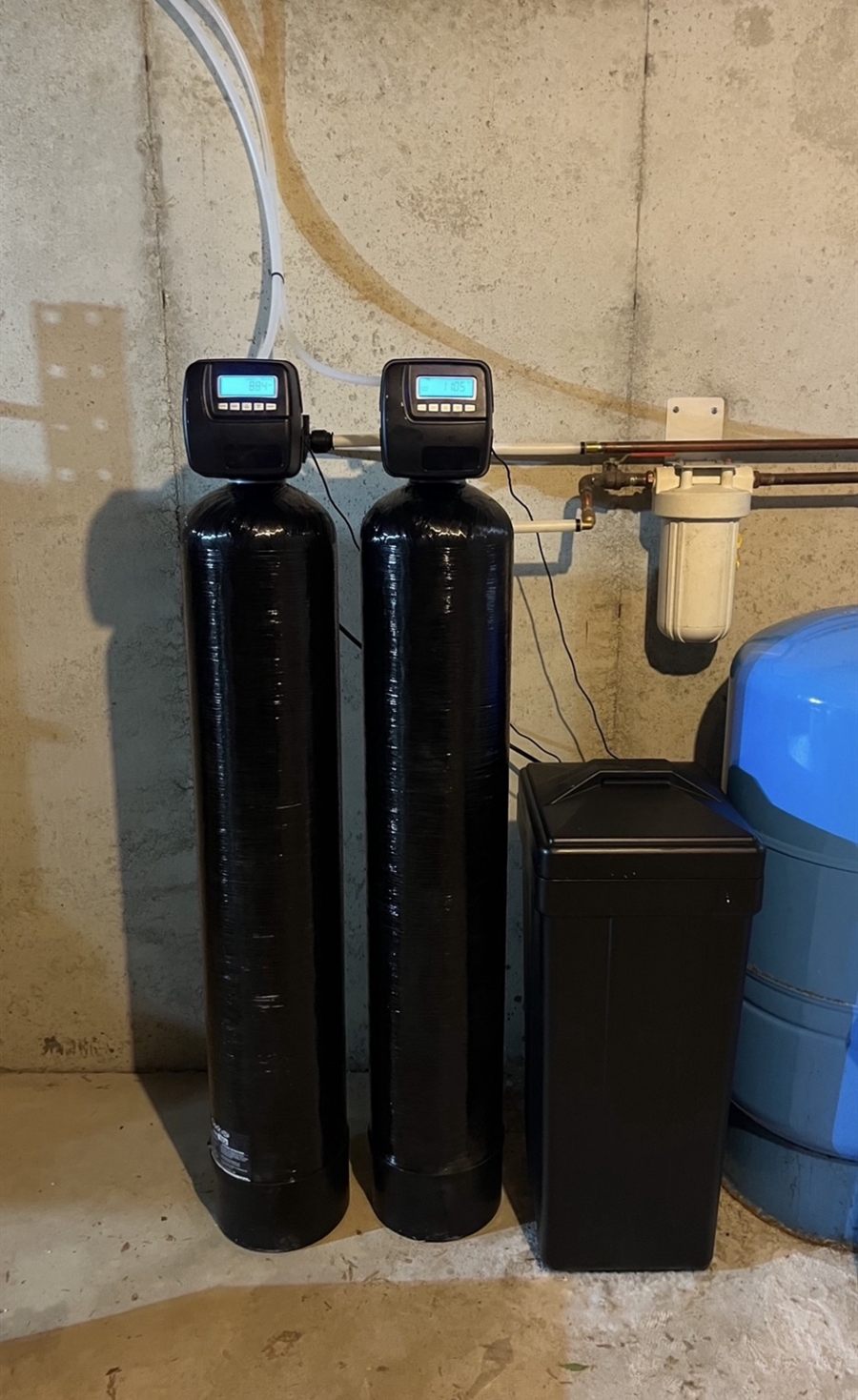
Signs of iron and sulfur
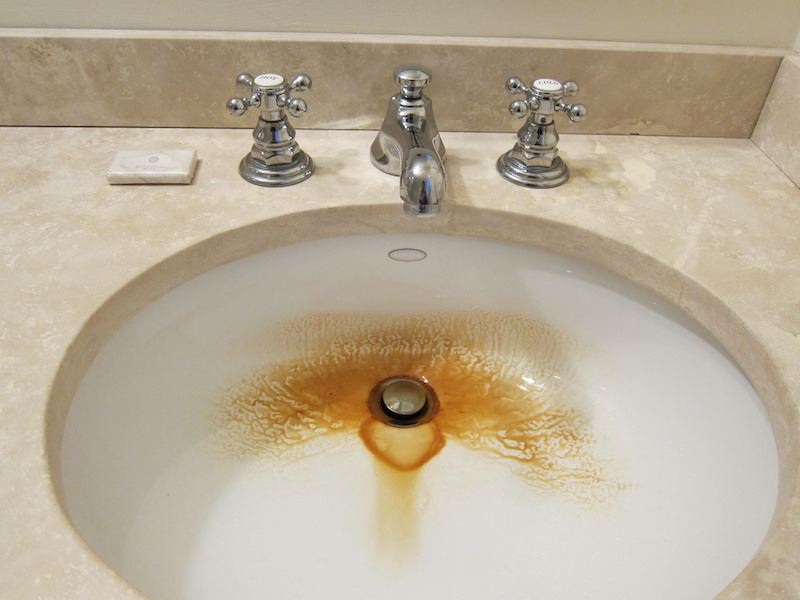
- Reddish-brown stains on sinks, tubs, toilets and fixtures
- Rust stains on clothes and linens that won’t wash out
- A metallic taste in drinking water and coffee
- A rotten-egg smell, often strongest from hot water
- Iron buildup in pipes and appliances that slows water flow
How an air-injection iron filter works
The filter keeps a bubble of air at the top of the tank, compressed by your well pressure. As water passes through the air, iron and hydrogen sulfide turn into particles that the filter media traps.
When it regenerates, the filter backwashes to flush out what it caught, then draws in fresh air to rebuild the bubble before going back into service. There are no chemicals to add.
Depending on your water, other media can be the better choice, such as manganese greensand or Birm. Your water test decides which.
Usually paired with a softener
An iron filter removes iron, manganese and hydrogen sulfide, but not hardness. Most wells with iron also have hard water, so the iron filter goes in first and a water softener after it. Keeping iron out of the softener also helps it last longer.
Installation and service
- Sized and set up for your water test results
- Warranties on both the equipment and our workmanship
- Checks and adjustments if your water changes
- Repairs on most brands