Signs you have hard water
Hard water carries extra calcium and magnesium. It’s generally safe to drink, but it’s hard on your home.
- White crust on faucets and showerheads
- Spots on glasses and dishes
- Soap and shampoo that won’t lather, so you use more
- Dry skin, dull hair and stiff, dingy laundry
- Scale that shortens the life of water heaters, washers and dishwashers
How a softener works
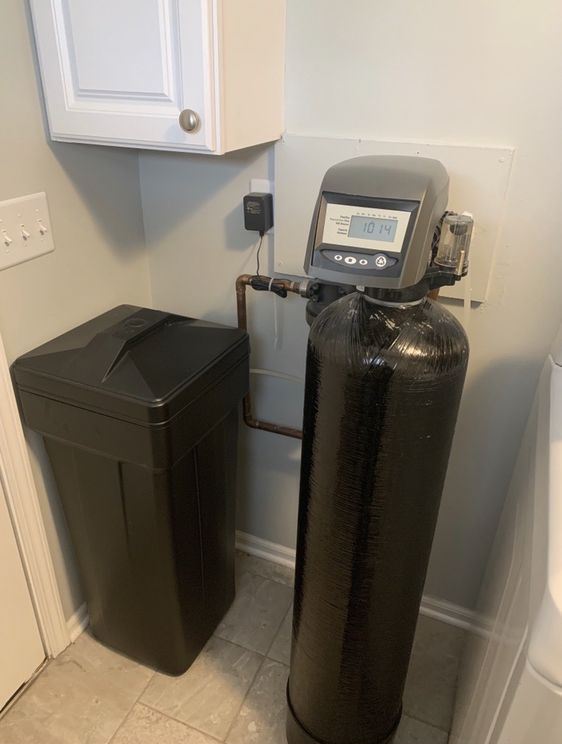
A softener tank is filled with resin beads. As water passes through, the beads hold on to the calcium and magnesium and swap them for sodium or potassium. Every so often the system cleans itself by rinsing the beads with salt water from the brine tank, then goes back to softening.
Single-tank or twin-tank
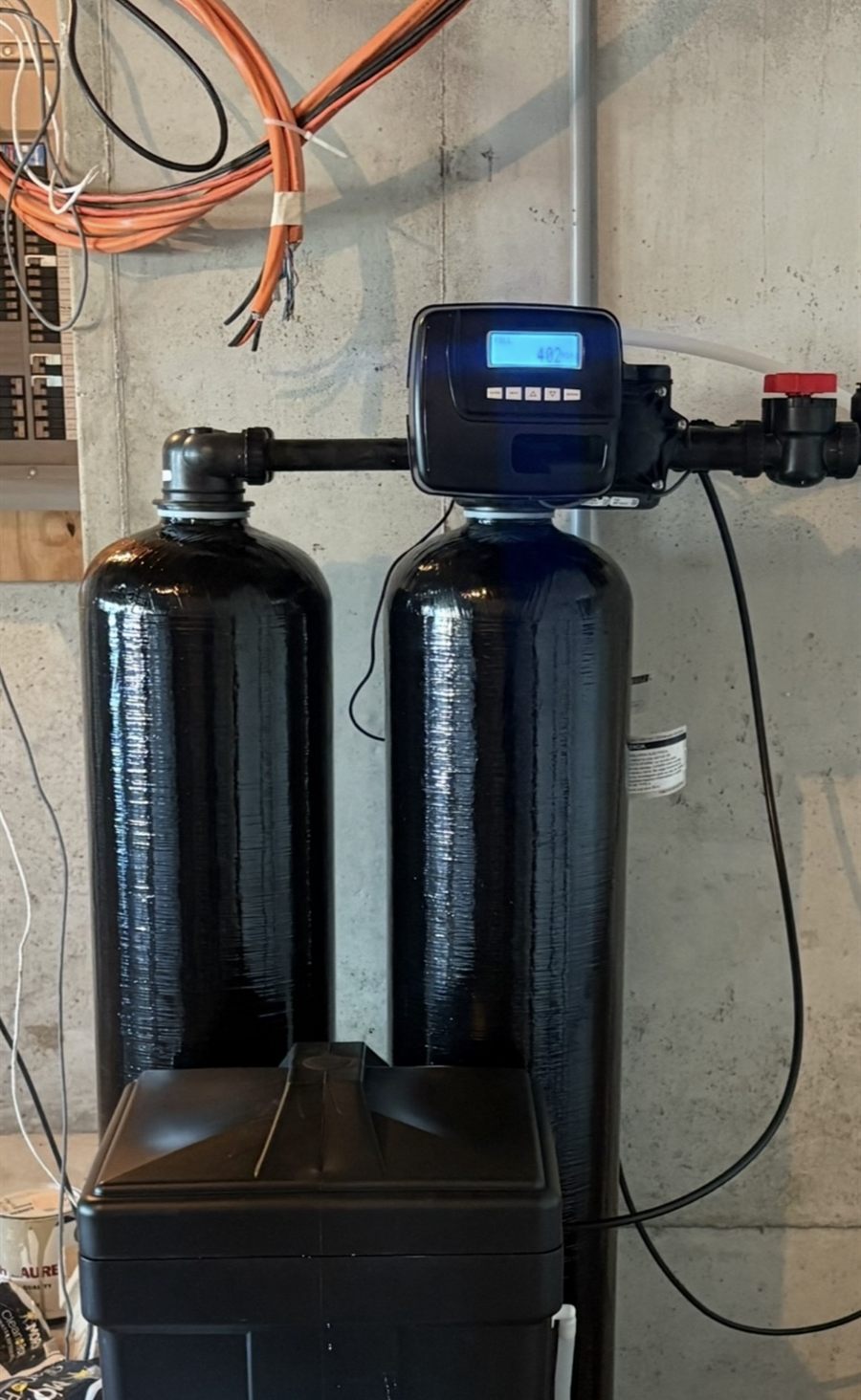
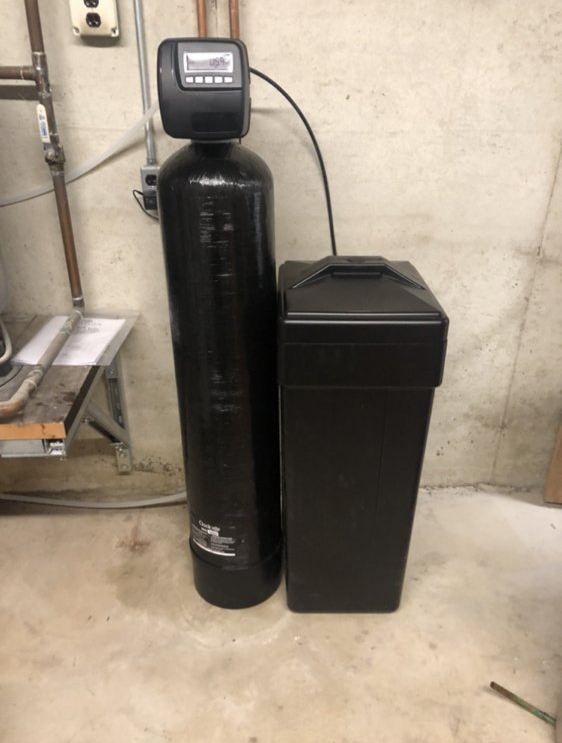
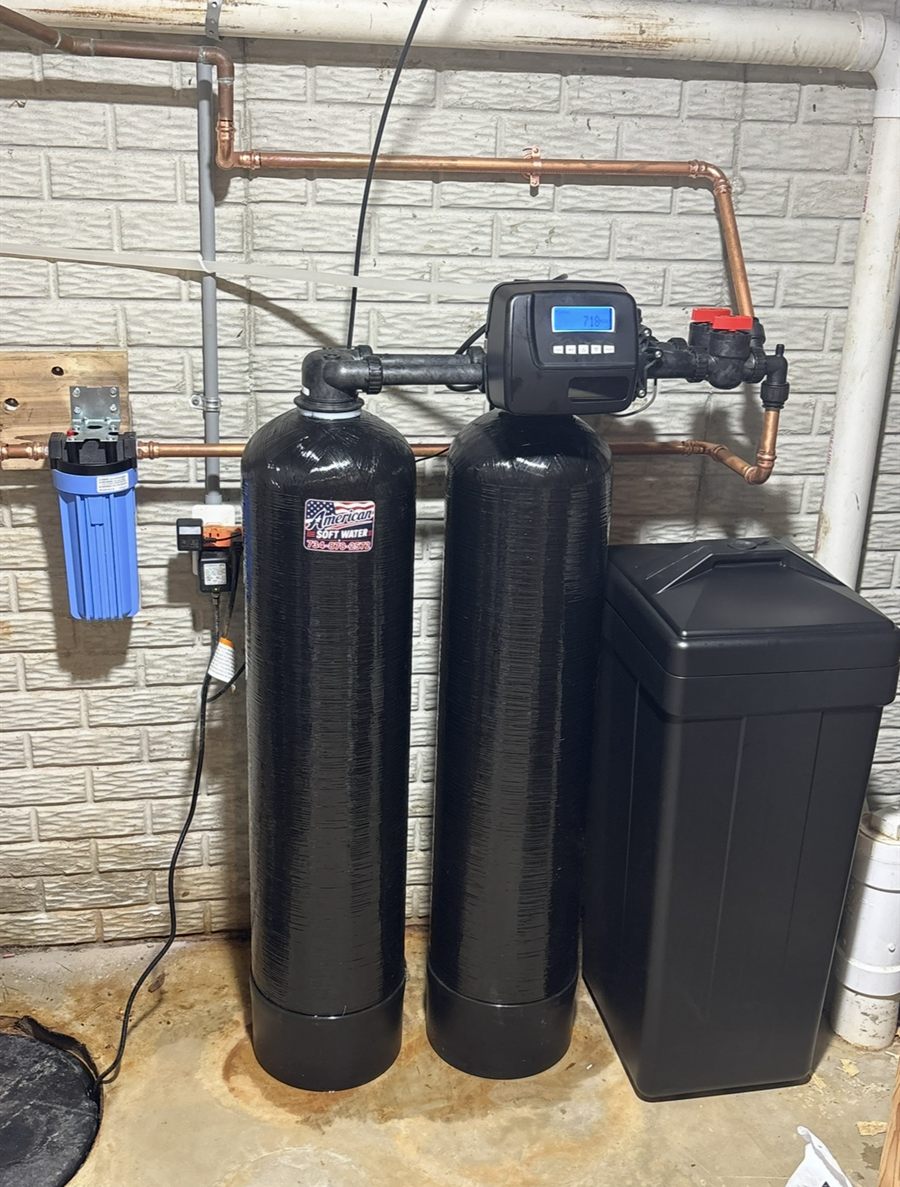
A single-tank softener regenerates on a schedule, usually overnight while nobody’s using water. A twin-tank softener runs two tanks from one valve, so one tank is always in service while the other regenerates. That means soft water around the clock, which suits bigger households and very hard water.
We also offer refurbished softeners when budget matters. Whichever you choose, it’s set up for your water test results rather than a factory default.
Iron in your water too?
A softener can handle a little iron. When there’s more, or a rotten-egg smell, an iron and sulfur filter goes in ahead of the softener so the softener can do its job. Most of the well-water systems we install are an iron filter and a softener together.
Salt, service and repairs
- Salt delivery, carried to your brine tank
- Resin cleaning, salt level checks and performance checks
- Repairs on most brands, including systems we didn’t install
Not sure if your softener is worth fixing? Text a picture of it to Dan at 734-878-2572. He can come out and evaluate the unit to see if it’s repairable or not. Depending on the issue, sometimes all it needs is a little cleaning.